
Ao considerar inversões avançadas, é importante lembrar que você, está, e você vai são também inversões. No entanto, essas não são as que abordaremos hoje. Há quatro tipos de inversões no total.
A inversão é um daqueles tópicos gramaticais que parecem incomuns à primeira vista, mas se tornam muito mais fáceis assim que você entende por que ela existe. Em inglês, normalmente seguimos a ordem sujeito-verbo, mas na inversão essa ordem muda para ênfase, estilo ou estrutura. É especialmente comum em inglês avançado, escrita formal e contextos de exames.
Houve um tempo, enquanto me preparava para o C2 Proficiency, em que fiquei obcecado por inversões. Mal sabia eu que elas eram apenas um dos muitos elementos que poderiam refinar minha produção linguística — ou assim eu diria.
É importante lembrar que a inversão não é usada apenas para soar “chique”. Ela tem funções específicas. Às vezes, cria ênfase, às vezes torna a frase mais formal e, às vezes, ajuda a frase a soar natural em inglês. Se os aprendizes tentarem forçar a inversão em todas as frases, o resultado pode soar estranho. O objetivo não é usá-la em excesso, mas reconhecer quando ela é apropriada.
O mais simples é com Advérbios negativos ou expressões adverbiais. Eu os considero os mais simples, pois tendem a ser os mais facilmente perceptíveis e integrados de forma fluida à fala e à escrita.
Quando usar inversões
1 Advérbios Negativos
Advérbios negativos como nunca, raramente, raramente, mal, e mal frequentemente desencadeiam inversão. Este tipo é provavelmente o mais fácil de identificar, especialmente na escrita formal e em inglês mais avançado. Quando estes advérbios são colocados no início da frase, o verbo auxiliar vem antes do sujeito.

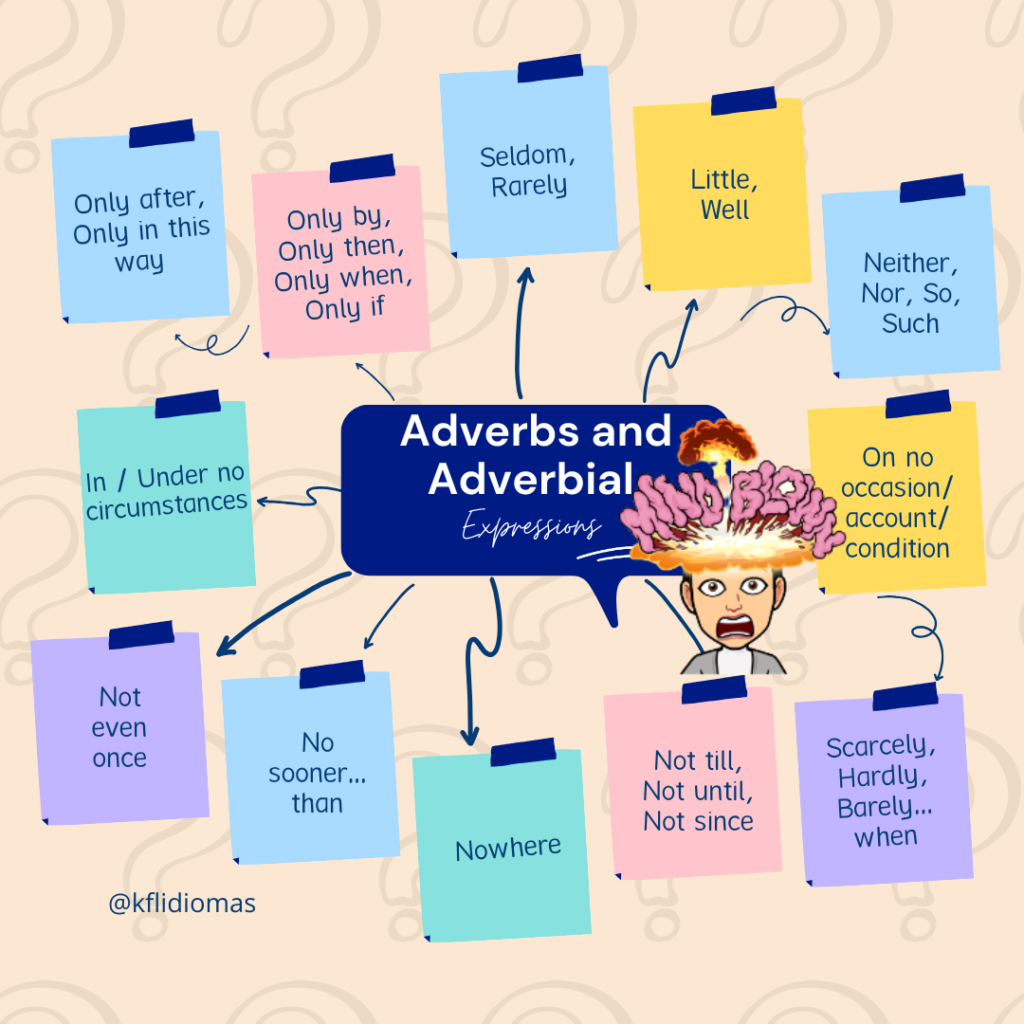
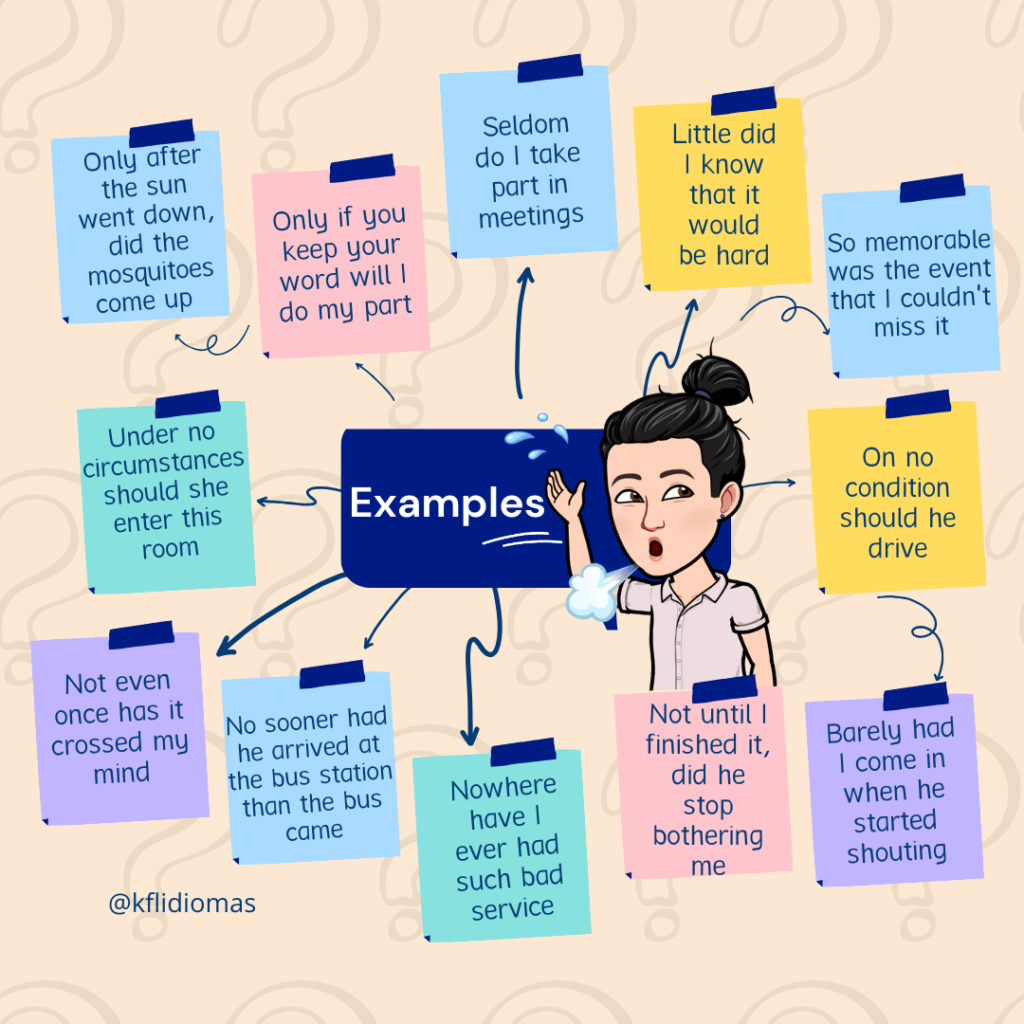
https://www.instagram.com/p/ChYFy4Khvo2/?igsh=ODM0MHEwZml6c3hh
2 Orações Condicionais
O segundo tipo de inversão ocorre em frases condicionais. Neste vídeo, vamos focar nos first-conditionals, embora os second- e third-conditionals também empreguem inversão em certas estruturas.
Em vez de usar se, o inglês às vezes usa a inversão para um efeito mais formal e elegante.
Dê uma olhada nas imagens para conhecê-las.


3 Frases com "So" e "Such"
A terceira categoria envolve inversões com então e tal. Assista ao vídeo para entender melhor e verificar exemplos.
4 Advérbios de lugar
O tipo final é acionado por advérbios de lugar. Embora seja um tipo de inversão, os gramáticos geralmente o chamam de anteposição.
Quando um advérbio de lugar (por exemplo, aqui, ali, acima, abaixo, fora, dentro, fora, embora) é colocado no início de uma frase, inversão ocorre frequentemente quando o verbo é intransitivo (ou seja, não admite objeto direto). Exemplos:
Aí vem o trem.
(Ordem normal: O trem vem aqui.)
Foi-se a minha chance de ganhar.
(Minha chance de ganhar vai lá.)
As crianças explodiram, rindo de excitação.
(Ordem normal: As crianças saíram correndo, rindo de empolgação.)
Caíram as maçãs da árvore.
(Ordem normal: As maçãs caíram da árvore.)
O ladrão fugiu antes da chegada da polícia.
(A ordem normal: O ladrão fugiu antes da polícia chegar.)
Entrou o gerente, com um ar furioso.
(Ordem normal: O gerente entrou, furioso.)
O pássaro voou para o céu.
(A ordem normal: O pássaro voou para o céu.)
O balão subiu, desaparecendo entre as nuvens.
(Ordem normal: O balão subiu, desaparecendo nas nuvens.)
O carro em alta velocidade dobrou a esquina.
(Ordem normal: Um carro em alta velocidade virou a esquina.)
Os paramédicos entraram correndo na sala.
(Ordem normal: Os paramédicos correram para dentro da sala.)
Na escrita formal ou na literatura, quando um advérbio de lugar inicia a frase, adicionamos ênfase a ele. Isso cria um efeito mais vívido e estilístico, motivo pelo qual a inversão é tão comum na escrita narrativa e em textos mais artísticos.
Pensamento final
Inversões não são apenas um ponto gramatical complicado. Elas são uma forma de adicionar ênfase, formalidade e estilo ao inglês. Assim que você começar a notá-las, você as verá em textos de leitura, escrita formal e até mesmo na fala.